Documentation Index
Fetch the complete documentation index at: https://docs.hyfi.finance/llms.txt
Use this file to discover all available pages before exploring further.
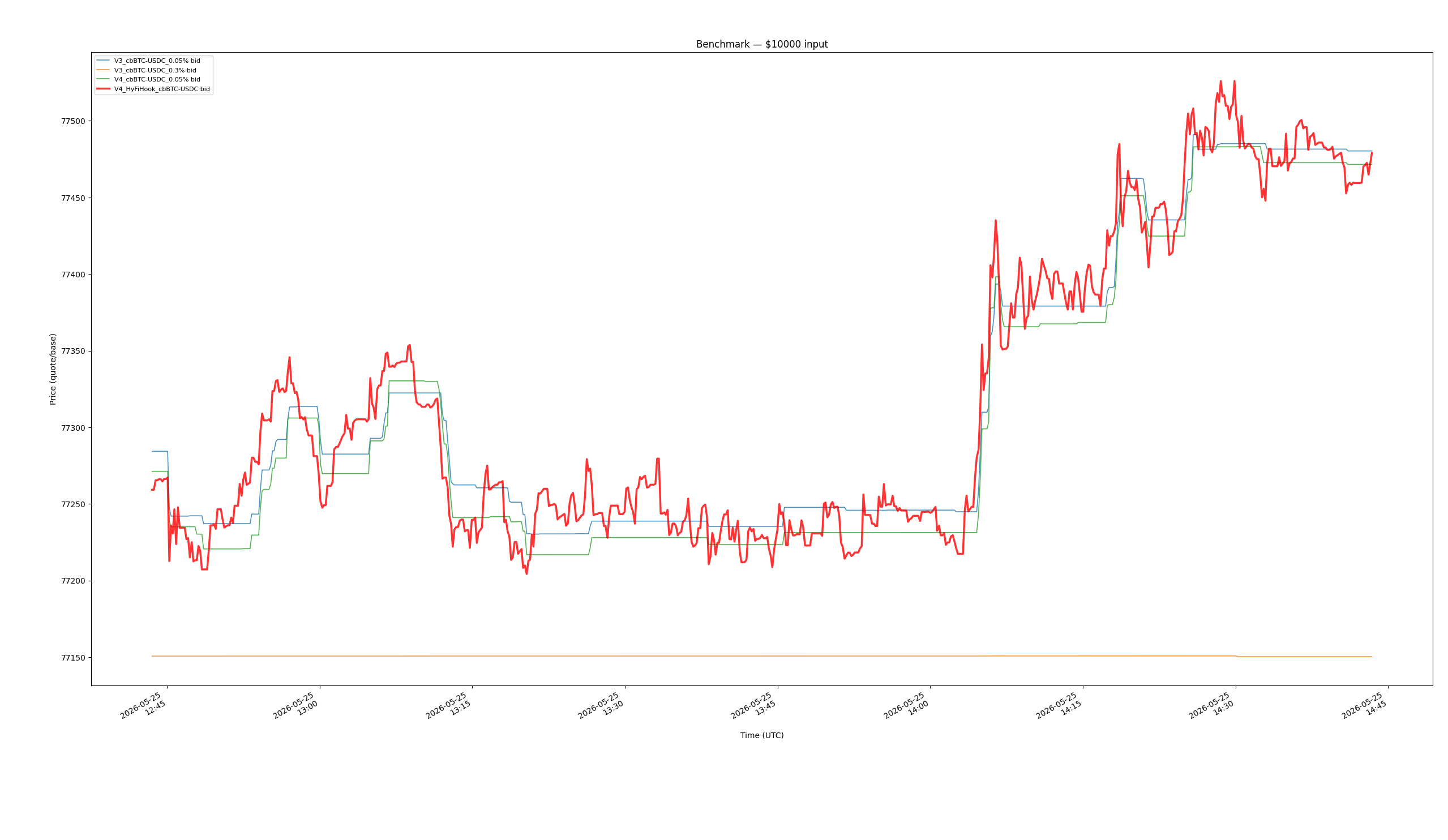
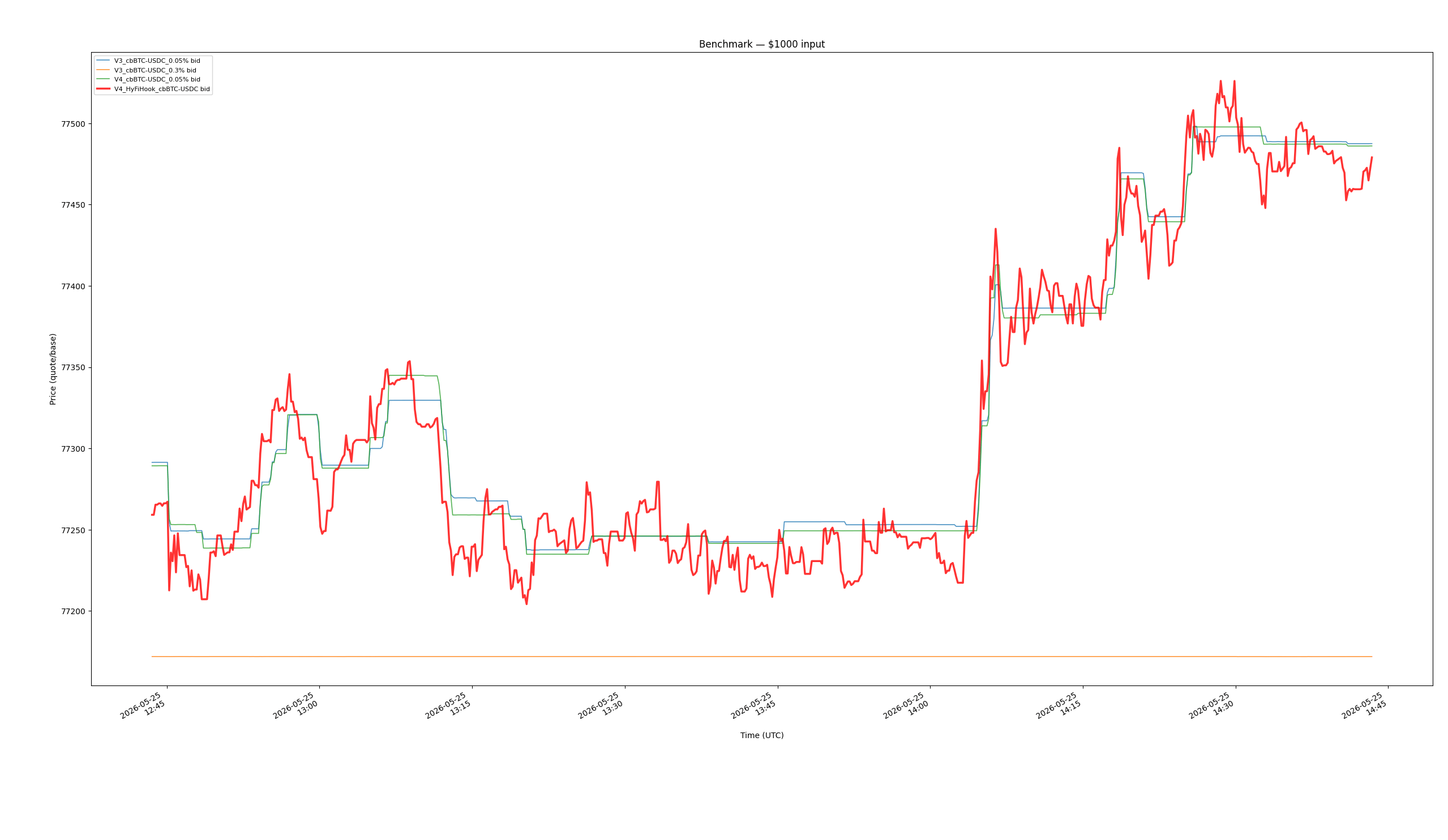
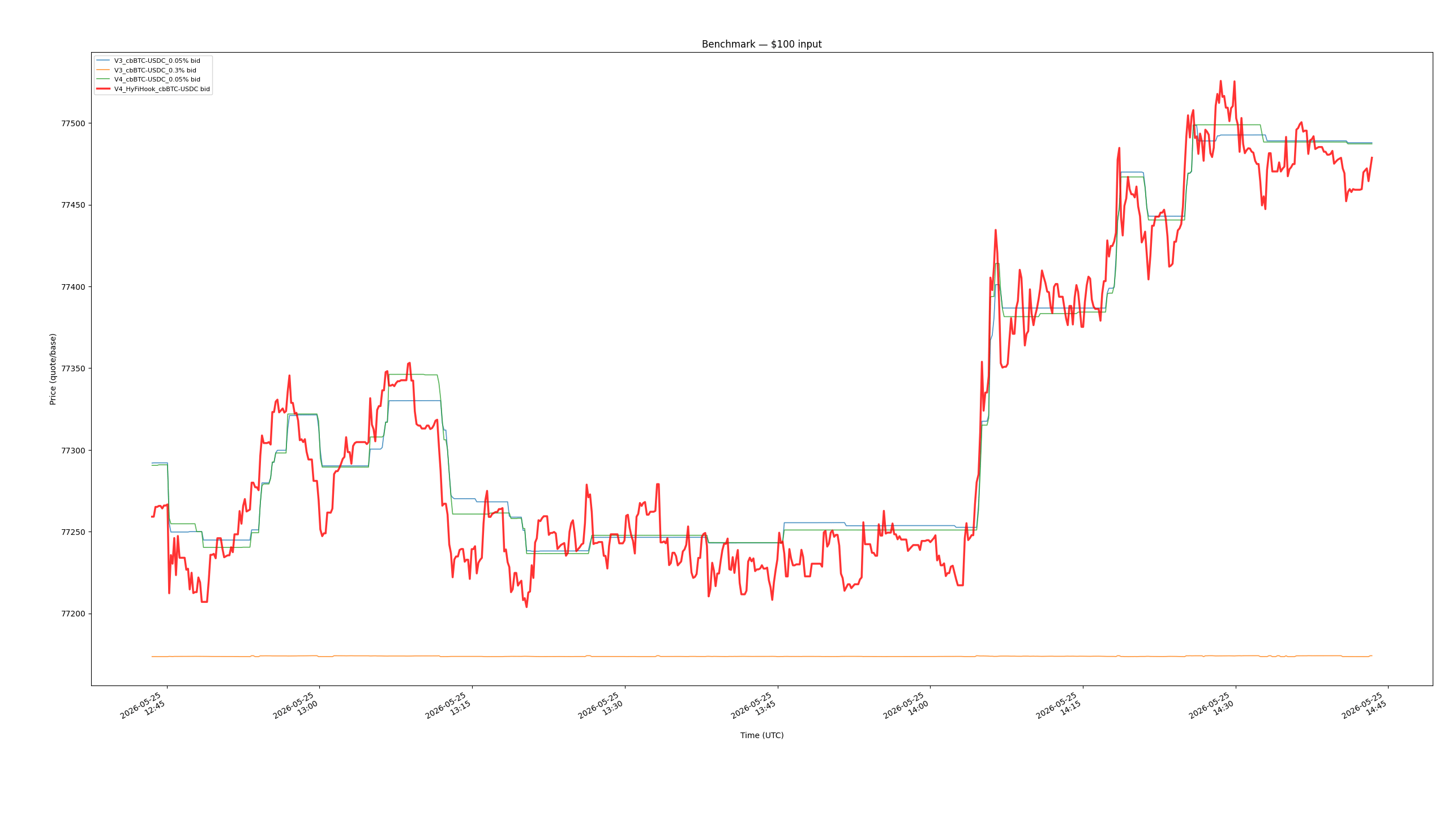
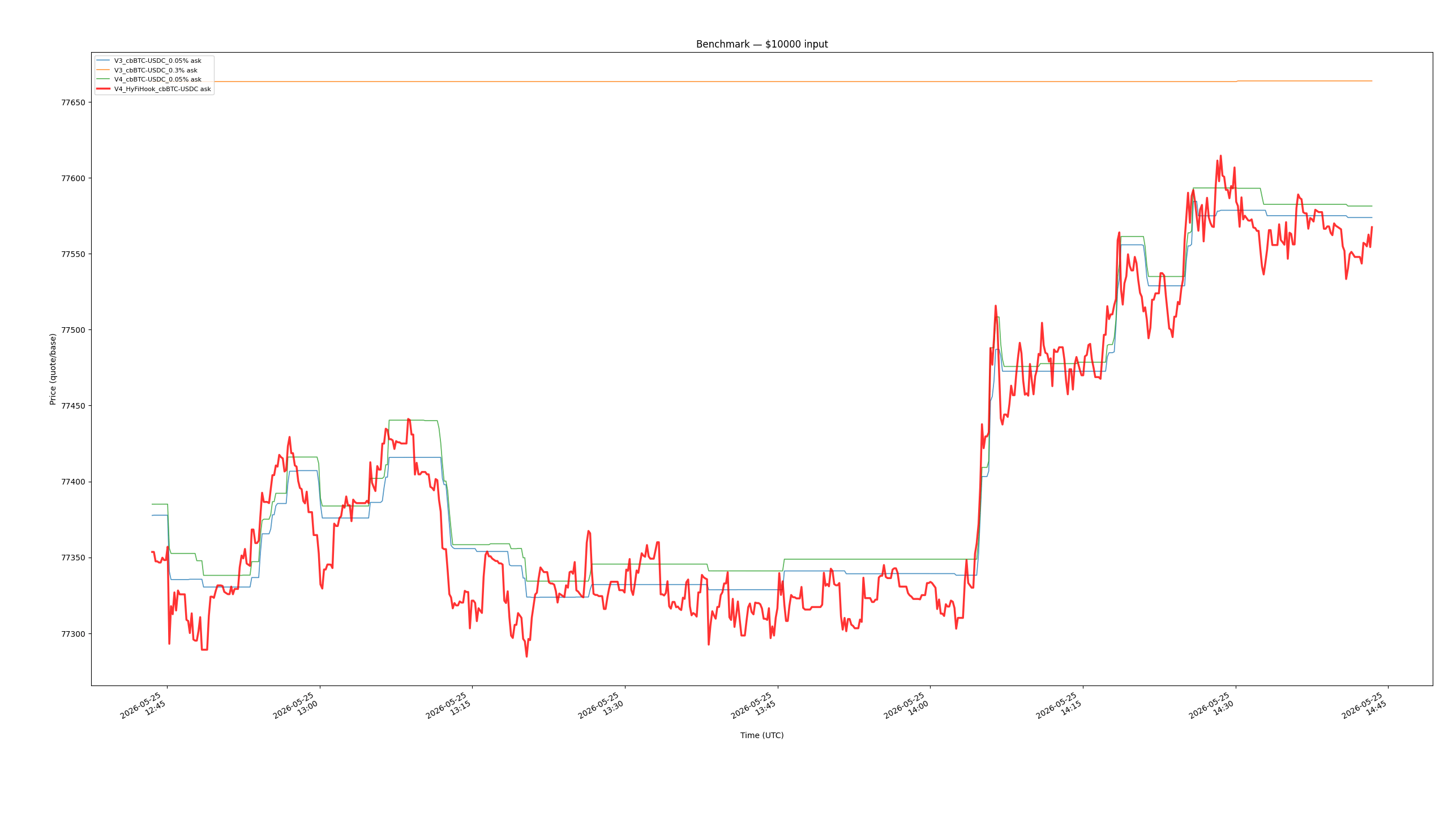
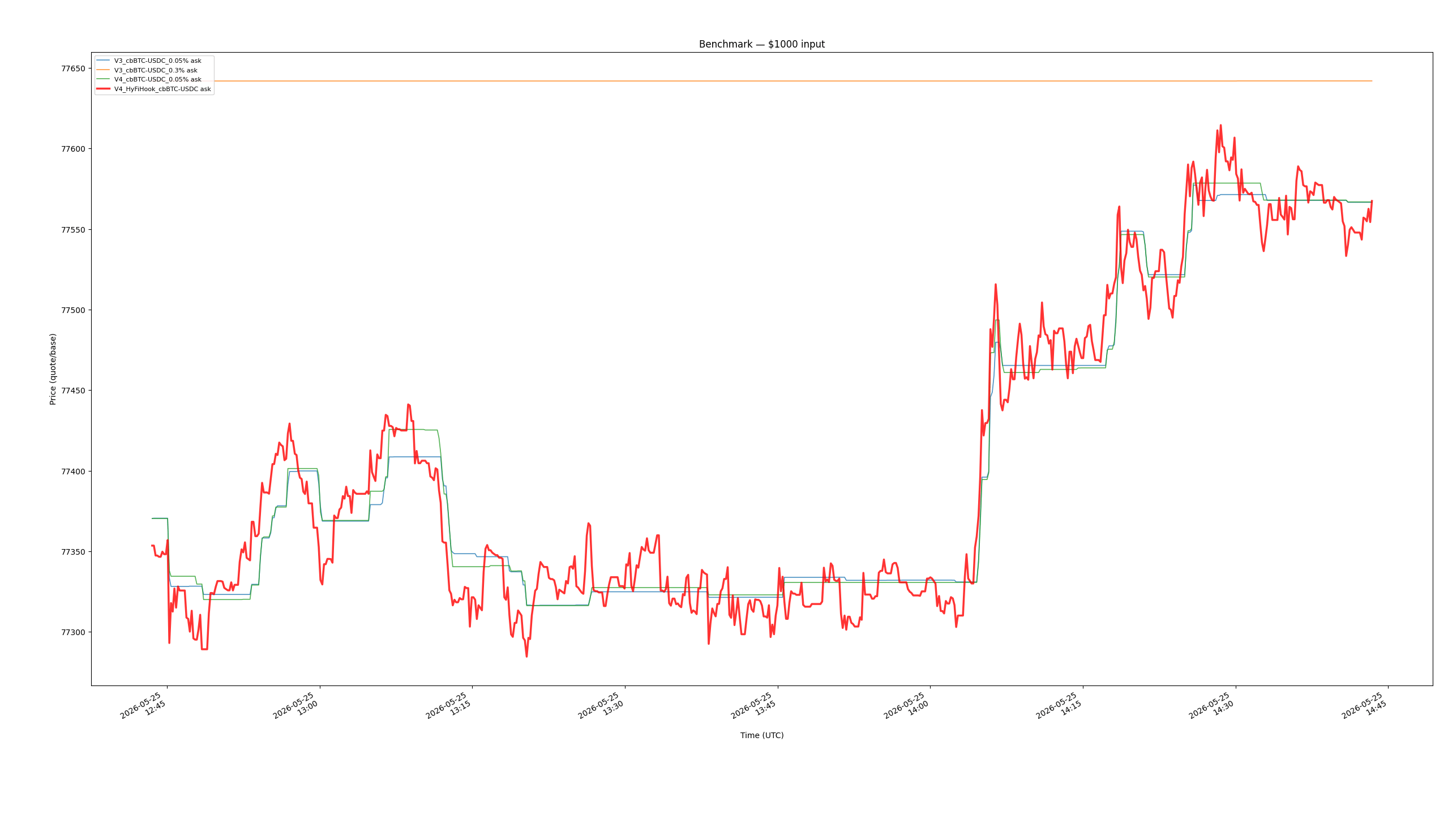
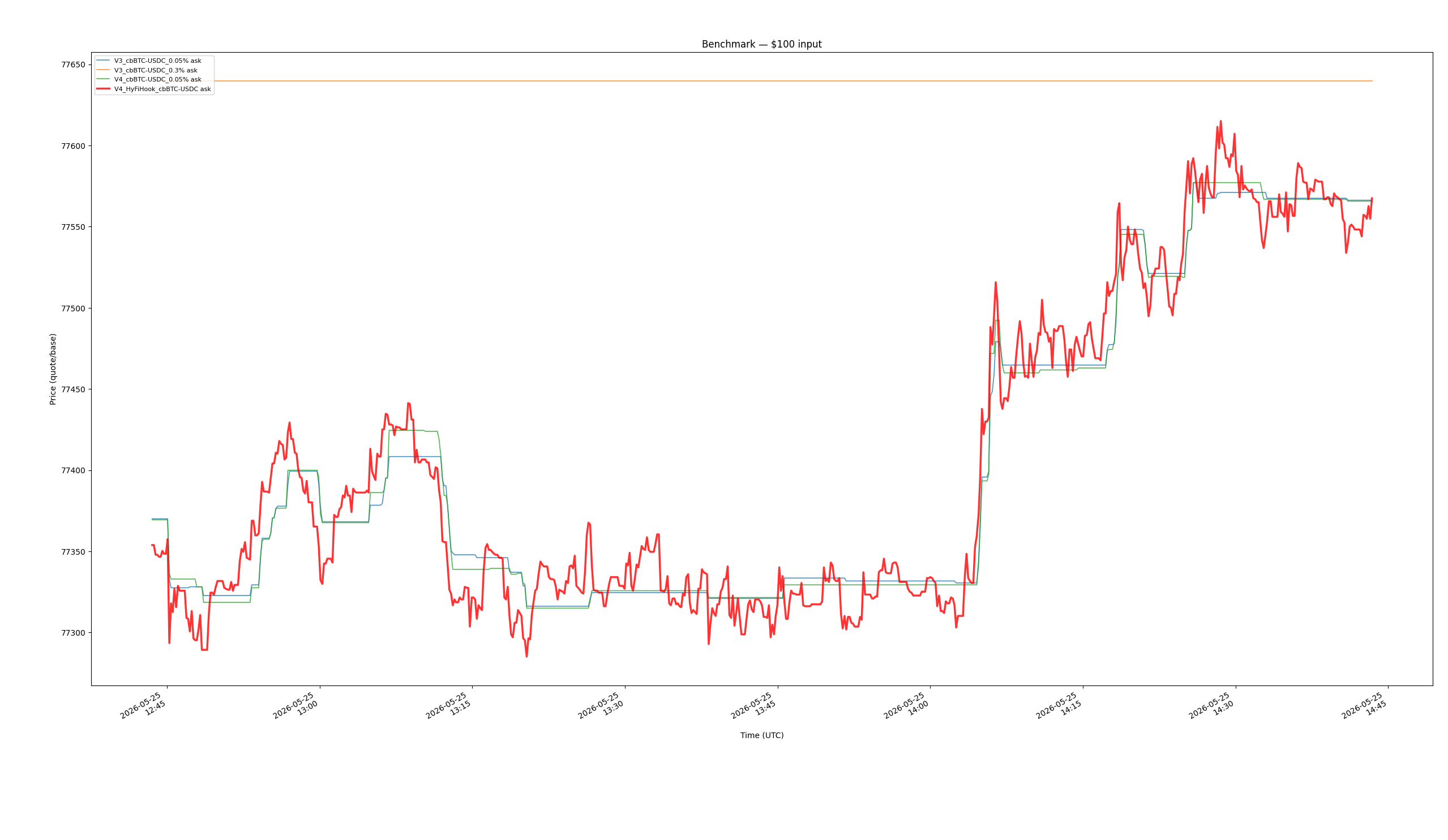
Below, graphs for only 2 hours of data (along with the stats from those 2h) are shown so it’s easier to see the lines (a bit less trading volume vs ETH-USDC so 2h is easier to see) — the full data is at the bottom. The Quoter is always using 0.05% for a fair comparison to the other pools. This pair (like most pairs) has no 0.01% fee-tier pool, so HyFi is more competitive in this case because it isn’t being undercut.
For reference, current TVL of the relevant Uniswap pools on Base on 31.5.26:
| Pool | TVL |
|---|
| V3 cbBTC-USDC 0.05% | $11M |
| V4 cbBTC-USDC 0.05% | $3.8M |
| V3 cbBTC-USDC 0.3% | $3.3M |
| V4 HyFiHook cbBTC-USDC 0.05% | $20,000
|
Bids
If a user is selling cbBTC, they want to sell to the highest price that someone is willing to buy at. HyFi is the red line, so being the line at the top will win trades.
| Pool | Win rate |
|---|
| V3 cbBTC-USDC 0.05% | 48.0% |
| V3 cbBTC-USDC 0.3% | 0.0% |
| V4 cbBTC-USDC 0.05% | 2.8% |
| V4 HyFiHook cbBTC-USDC 0.05% | 49.2% |
| Pool | Win rate |
|---|
| V3 cbBTC-USDC 0.05% | 49.9% |
| V3 cbBTC-USDC 0.3% | 0.0% |
| V4 cbBTC-USDC 0.05% | 16.0% |
| V4 HyFiHook cbBTC-USDC 0.05% | 34.0% |
| Pool | Win rate |
|---|
| V3 cbBTC-USDC 0.05% | 43.9% |
| V3 cbBTC-USDC 0.3% | 0.0% |
| V4 cbBTC-USDC 0.05% | 24.5% |
| V4 HyFiHook cbBTC-USDC 0.05% | 31.6% |
Asks
If a user is buying cbBTC, they want the lowest price that someone is willing to sell at. HyFi is the red line, so being the line at the bottom will win trades.
| Pool | Win rate |
|---|
| V3 cbBTC-USDC 0.05% | 35.9% |
| V3 cbBTC-USDC 0.3% | 0.0% |
| V4 cbBTC-USDC 0.05% | 0.0% |
| V4 HyFiHook cbBTC-USDC 0.05% | 64.1% |
| Pool | Win rate |
|---|
| V3 cbBTC-USDC 0.05% | 26.0% |
| V3 cbBTC-USDC 0.3% | 0.0% |
| V4 cbBTC-USDC 0.05% | 26.9% |
| V4 HyFiHook cbBTC-USDC 0.05% | 47.1% |
| Pool | Win rate |
|---|
| V3 cbBTC-USDC 0.05% | 20.0% |
| V3 cbBTC-USDC 0.3% | 0.0% |
| V4 cbBTC-USDC 0.05% | 35.3% |
| V4 HyFiHook cbBTC-USDC 0.05% | 44.7% |
Full Data
For the full length of the data (about 4 days) the graphs are too dense to be useful.
Bids
| Pool | Win rate |
|---|
| V3 cbBTC-USDC 0.05% | 39.8% |
| V3 cbBTC-USDC 0.3% | 0.0% |
| V4 cbBTC-USDC 0.05% | 0.5% |
| V4 HyFiHook cbBTC-USDC 0.05% | 59.7% |
| Pool | Win rate |
|---|
| V3 cbBTC-USDC 0.05% | 36.5% |
| V3 cbBTC-USDC 0.3% | 1.7% |
| V4 cbBTC-USDC 0.05% | 13.1% |
| V4 HyFiHook cbBTC-USDC 0.05% | 48.8% |
| Pool | Win rate |
|---|
| V3 cbBTC-USDC 0.05% | 28.8% |
| V3 cbBTC-USDC 0.3% | 2.6% |
| V4 cbBTC-USDC 0.05% | 21.4% |
| V4 HyFiHook cbBTC-USDC 0.05% | 47.2% |
Asks
| Pool | Win rate |
|---|
| V3 cbBTC-USDC 0.05% | 48.4% |
| V3 cbBTC-USDC 0.3% | 0.1% |
| V4 cbBTC-USDC 0.05% | 0.8% |
| V4 HyFiHook cbBTC-USDC 0.05% | 50.8% |
| Pool | Win rate |
|---|
| V3 cbBTC-USDC 0.05% | 38.2% |
| V3 cbBTC-USDC 0.3% | 3.2% |
| V4 cbBTC-USDC 0.05% | 19.7% |
| V4 HyFiHook cbBTC-USDC 0.05% | 38.9% |
| Pool | Win rate |
|---|
| V3 cbBTC-USDC 0.05% | 31.9% |
| V3 cbBTC-USDC 0.3% | 3.8% |
| V4 cbBTC-USDC 0.05% | 27.5% |
| V4 HyFiHook cbBTC-USDC 0.05% | 36.8% |
Conclusion
HyFi is clearly extremely competitive at every trade size. It wins over half the $10k bids and asks, roughly tied for the lead at $1k, and holds a strong position even at $100 — all with ~50-500x less capital vs Uniswap pools’ TVL.
It’s also notable that a large % of the trades the passive pools win is toxic flow, and so if we tried to measure the % of trades that HyFi wins that are profitable trades to win, the win rate would be even higher.
The thing that matters most to HyFi’s profitability, other than avoiding toxic flow, is its ability to compete on slippage, which is proportional to the ratio between the slippage on DEXes vs CEXes. Competing on L2s gives HyFi an advantage compared to L1s because the CEX slippage is unchanged but TVL is lower on L2s and therefore slippage is higher.